Pavers or stamped concrete?
Pavers are more forgiving for shifting California soil, can be lifted and reset, and don't crack. Stamped concrete is cheaper upfront but will eventually crack and is much harder to fix invisibly.
Patios, walkways, driveways, retaining walls, and outdoor structures.
Overview
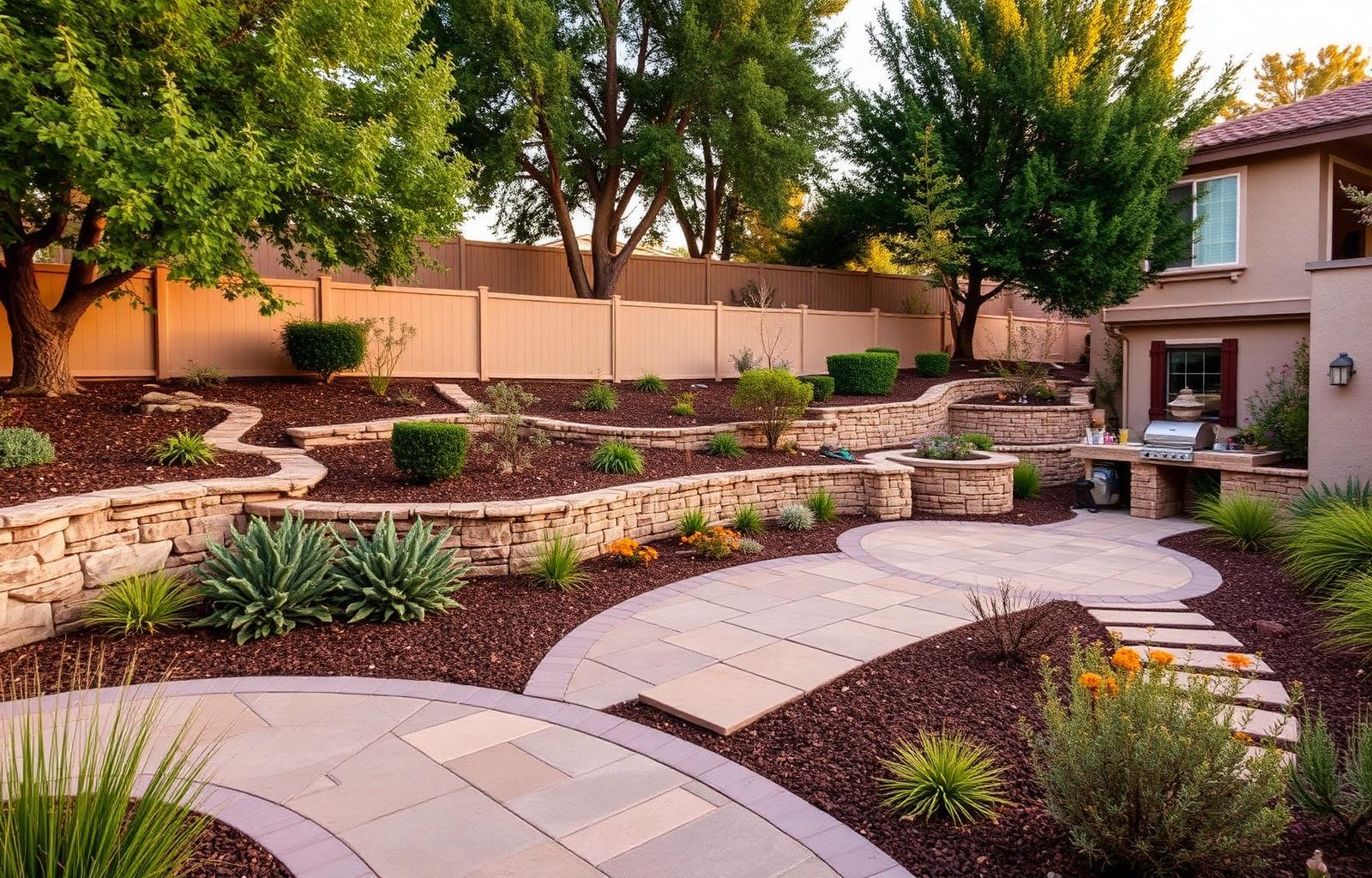
Hardscape is what makes outdoor space usable — and what survives California's sun, drought, and earth-movement. We design and build patios, driveways, walkways, retaining walls, and outdoor structures (pergolas, BBQ surrounds, fire pits) using paver, concrete, decomposed granite, and segmental block.
Drainage gets engineered first. Most hardscape failures we get called to fix are downstream of a drainage problem the original installer ignored.
What's included
Our process
01
Layout, materials, drainage plan.
02
Dig to base depth, compact, install drainage.
03
Class II base, geotextile where needed.
04
Place pavers/pour concrete; cut, joint-sand or finish.
Pricing
Pricing depends on scope, materials, and site conditions. We provide a clear written quote after a free assessment.
Timeline
Most projects begin within 1–3 weeks of an approved quote, depending on permitting and material lead times.
FAQs
Pavers are more forgiving for shifting California soil, can be lifted and reset, and don't crack. Stamped concrete is cheaper upfront but will eventually crack and is much harder to fix invisibly.
Typical patios: 6" of base over compacted subgrade for foot traffic; 8–12" for driveways. We engineer drainage at this stage.
Yes. Walls under 4 feet tall (measured from the bottom of footing) typically don't require an engineer; over 4 feet need an engineered design and permit. We handle both.
Tell us about the property and the work you need. We'll respond within one business day.